
Did you know that today is a huge celebration for more than 346,000 people in Bulgaria who have flower-related names? That’s right—this holiday is called Tsvetnitsa (Flowers Day) and those whose names are based on flowers receive gifts and beautifully arranged bouquets. And my mother is one of them, so I have a special attachment to this day too.
In fact the whole of Eastern Europe celebrates Palm Sunday in one way or another. This festive day is deeply rooted in both Christian tradition and Balkan folklore, marking the beginning of Holy Week and the triumphal entry of Jesus Christ into Jerusalem. According to the Bible, he was greeted by crowds waving palm branches—a gesture of reverence and joy. But in Bulgaria, where palm trees are scarce, willow branches take center stage. These are blessed in churches and often used to decorate homes, believed to bring health and protection from evil.
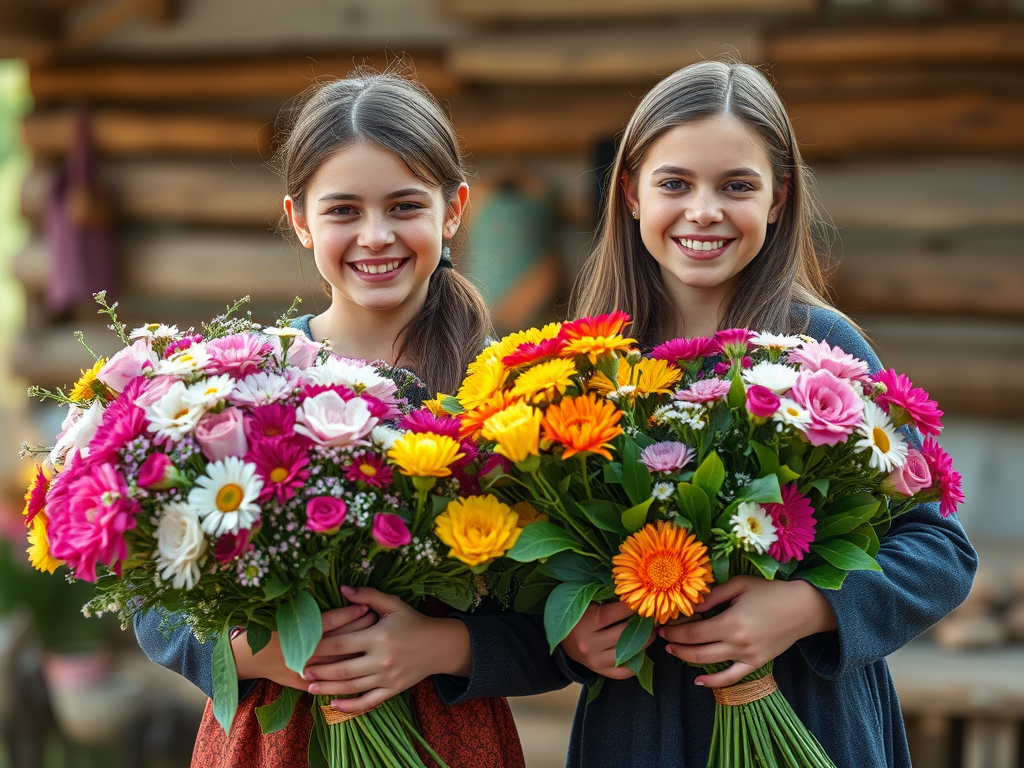
Tsvetnitsa is also a celebration of spring’s renewal and nature’s beauty. It’s common for people to visit churches carrying flowers, which are blessed and consecrated during the service. The holiday is deeply intertwined with Bulgarian folklore, featuring customs like “kumichene.” In this tradition, young girls gather by a river, floating wreaths downstream to see whose wreath travels the farthest—a playful yet symbolic ritual of youth and vitality.
But the festivities don’t stop there. Tsvetnitsa is also a name day for those with floral names, making it a personal celebration for many. Imagine a day where your name is celebrated alongside the blooming of nature—how poetic is that?
Names like Tsvetelina, Lilia, Yavor, and Roza are celebrated on this day, making it a joyful occasion for many Bulgarians. It is estimated that nearly 400,000 people are celebrating today, and even if you are not in the Eastern European region, this should not prevent you from embracing a celebratory spirit.
Rituals and Customs:
Early in the morning, young girls who participated in the previous day’s Lazarus Day rituals head to the nearest river. They carry traditional bread dolls or willow wreaths and engage in a ritual called “kumichene,” where they float these items on the river. The girl whose item floats first is declared the “kumitsa” and invites everyone to her home for a feast.
Food and Feasting:
Traditionally, fish is served on Tsvetnitsa, which is an exception to the fasting period leading up to Easter. The meal often includes traditional dishes like hominy (kachamak) and nettle puree.
Decorations and Wreaths:
People attend church services where they receive consecrated willow branches. These branches are used to decorate homes, often woven into wreaths, which are believed to bring health and protection throughout the year.
Determining the Date
Tsvetnitsa, or Palm Sunday, is celebrated on the Sunday before Easter, according to the Orthodox calendar. Since the Orthodox Church uses the Julian calendar, the date can vary from the Western Easter, which follows the Gregorian calendar. This means that Palm Sunday in Bulgaria might not coincide with the same date as in Western countries.
While the flower-themed name celebrations are unique to Bulgaria, other countries in the region have their own unique ways of intertwining nature and names into their celebrations. For example, in Romania and Serbia Palm Sunday is linked to saints rather than flowers, and in Ukraine the focus is again on religious customs, such as blessing willow branches, rather than celebrating flower names.
 Oggs' Earth
Leave a comment